Why the Epistle to the Hebrews?

This Article presents an intriguing perspective on the reason and purpose of the Epistle to the Hebrews.

We understand that this Epistle was initially written in the 1st century C.E. for an audience of Jewish or Hebrew converts to Christianity who needed encouragement to maintain their trust in Yahushua the Messiah.

This Article intends to demonstrate that the Epistle’s message was prophetic and also directed to the Hebrews of the House of Israel (commonly referred to as the Lost Ten Tribes) long after the death and resurrection of Yahushua.

We will also demonstrate that the House of Israel would be located far from the biblical land of Judaea, speaking in a foreign language differing from Hebrew or Hebrew/Aramaic.

Due to time and circumstance, we are approaching, or have already reached, a crucial period for the elect audience within the House of Israel to hear and understand Yahweh’s doctrine of the Eternal Inheritance, an indispensable theme throughout all of Scriptures.

This study aims to uncover the key found in the Epistle to the Hebrews, allowing those who are truly seeking to grasp how Father Yahweh, by means of Yahushua the Messiah, enables mankind to acquire the gift of salvation and eternal life.

To begin our quest, we will first highlight three noteworthy details:
Continue reading “Why the Epistle to the Hebrews?”

Israel Today – Part 2

If you’re still contemplating the conclusion of our last post, Israel Today – Part 1, this follow-up will make things more interesting.

We are now going to address a few other issues, namely the disposition, location, and condition of the nation of Ephraim/Israel, especially in the “Last Days.”

Disposition
Let us first look at the general disposition of the nation of Israel.

Furthermore Yahweh said to me, ‘I have seen this people, and behold, it is a stubborn people. (Deuteronomy 9:13)

You have been rebellious against Yahweh from the day that I knew you. (Deuteronomy 9:24)

Continue reading “Israel Today – Part 2”

Israel Today – Part 1

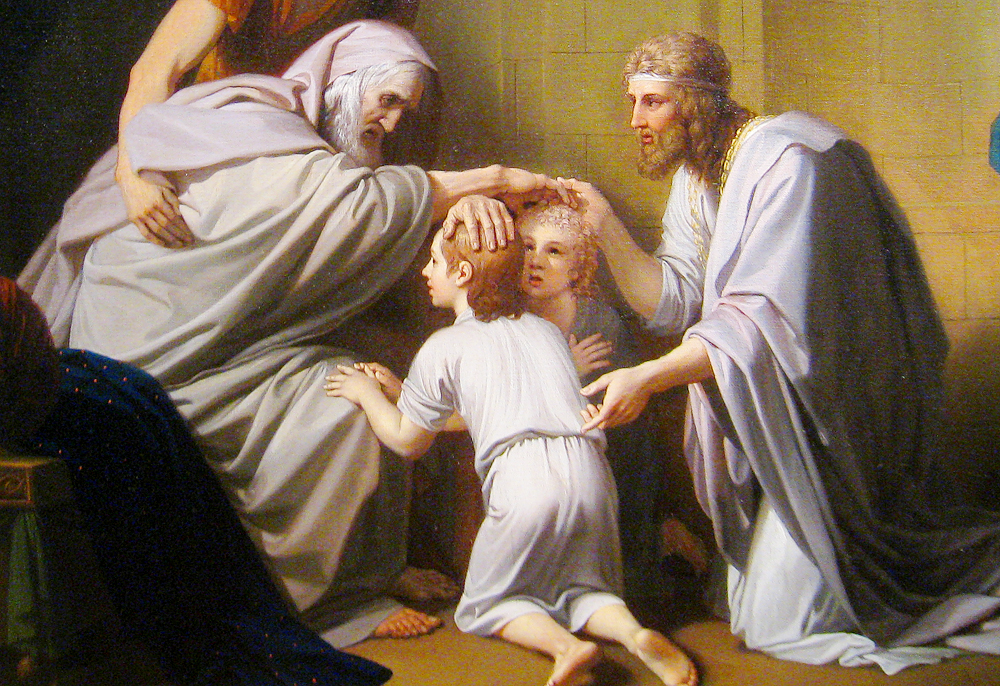
From a scriptural point of view, it would be worthwhile to provide the scriptural references regarding the unconditional birthright blessing that Yahweh gave to Isaac, Jacob, and the sons of Joseph, Ephraim and Manasseh.

The goal is to determine if any people or nations might meet the conditions of this blessing, thereby validating or challenging the accuracy of the Scriptures.

The following investigation may be quite engaging if you are interested in this exploration.

In Scriptures, an important aspect of the firstborn’s right is the birthright blessing. This blessing occurs when the patriarch of the family, who holds the unconditional blessing, approaches death and needs to pass it on to the son with the legal right to receive it.

Unconditional Blessing
This birthright blessing is cautiously given; once obtained, it is unconditional and cannot be revoked. We start to define the unconditional birthright blessing as it was given to Rebekah by her family.

Continue reading “Israel Today – Part 1”