
 Which scriptural topic causes the most confusion among Yahweh’s followers?
If you say Passover, you are making an insightful choice.
Almost everyone who attempts to observe Passover correctly seems to be at odds with someone or some group. Logic dictates that not everyone is right, and that at the same time, everyone may be wrong.
To address this issue, let us examine the scriptural evidence together to understand the core of the problem and explore possible solutions.
Years ago, there was a discussion with the leader of a well-known Sacred Name group headquartered in Missouri. Our scriptural discussion led to Passover, when he firmly stated, “I am not changing on this one. My mind is made up. I have extensively researched this topic, and it is final.”
Well, so much for abiding by the following scriptural precept:
Come, let us reason together. (Isaiah 1:18)
There is no shortage of written material from numerous Sacred Name groups purporting to prove the correct method for observing the Festival of Passover. However, one would be hard-pressed to find a universal agreement. When the dust settles on the various arguments back and forth, most everyone realizes the little progress made toward finding truth and unity.
The arguments presented by the various groups for the correct observance of Passover are fairly well known.
We want to introduce a perspective that might help break down barriers and allow Yahweh’s truth to prevail in the Passover dilemma.
First, we recommend an action that most people hesitate to do, which requires humility. For instance, one has to realize that the interpretation of Scriptures does not come from a person’s inner self.
Knowing this first, that no prophecy of the scripture is of any private interpretation. (2 Peter 1:20)
Therefore, one must admit that the interpretation of Scriptures or scriptural truth does not come from oneself. However, one can seriously tackle the situation if one understands and accepts that.
Next, let us keep it simple. For instance, we will only address one aspect of the Passover controversy. But hopefully we will provide some food for thought to provoke questions and make some progress toward Yahweh’s truth of the matter.
Question: Does the Festival of Passover and Unleavened Bread begin on Abib 14 and end on Abib 20 for a total of 7 days of the Festival? This also indicates that the first day of Unleavened Bread begins on Abib 14. But, of course, most professing followers of Yahweh would disagree and proclaim that there is all the proof in Scriptures that proves otherwise.
The messiah came under the Law (Torah of Moses) and was subject to all its relevant commands, including keeping the Passover. Since Yahushua never sinned (i.e., transgressed the Law), we can be sure he correctly observed the Passover. (Otherwise, Yahushua would have sinned.)
But when the time had fully come, Yahweh sent forth his son, born of woman, BORN UNDER THE LAW (Torah of Moses). (Galatians 4:4)
Scriptures are clear on this matter regarding the the Law.
And it was the PREPARATION OF THE PASSOVER, and about the sixth hour: and he (Pilate) saith unto the Jews, Behold your King! (John 19:14)
So because of the JEWISH DAY OF PREPARATION, as the tomb was close at hand, they laid Yahushua there. (John 19:42)
Undoubtedly, the implications gleaned from the two verses above pose a massive problem for many.
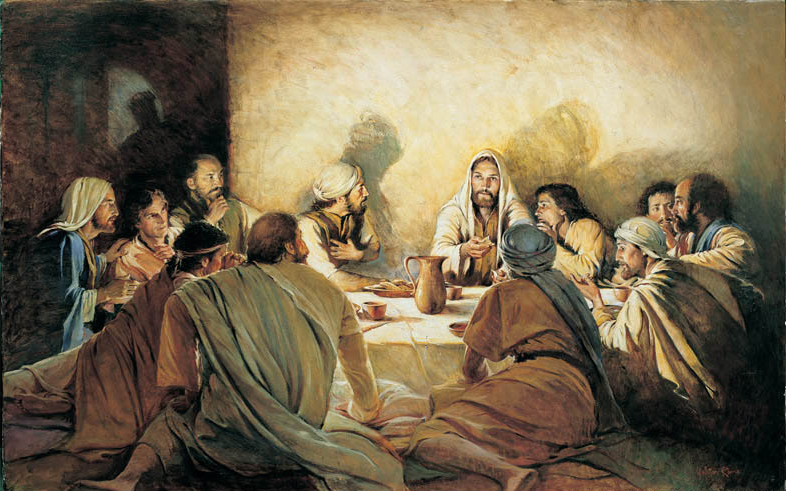
According to the scriptural narrative, Yahushua had made preparations for Passover prior to Abib 14. Along with his disciples, he ate the Passover meal that night after sundown at the beginning of Abib 14. This would mean that Yahushua observed the Festival of Passover, including the eating of the Passover lamb, was murdered and buried on the Jewish day of preparation of the Passover (Abib 14)!
Also, unless there is information to the contrary, Yahushua and his disciples would have eaten unleavened bread with the Passover meal after sundown at the beginning of Abib 14.
So Yahushua sent Peter and John, saying, “Go and PREPARE THE PASSOVER for us, THAT WE MAY EAT IT.” (Luke 22:8)
One conclusion could be that Yahushua knew he was to eat a counterfeit Passover meal, and then, to perpetrate the fraud, he lied to Peter and John. Of course, he would have had to lie, as he knew the true Passover meal was to take place at the beginning of Abib 15.
Continuing with the thought, since Yahushua knew he could not observe the Passover meal on Abib 15 (since he would be dead by then), he just bumped the meal up by a day. Besides, he also had to be the sacrificial lamb that was slaughtered in the afternoon of Abib 14, just as the Pharisaical religious leaders were killing their Passover lambs, which were to be eaten after sundown at the beginning of Abib 15.
Some even argue that breaking the law is necessary to uphold it. This scenario can be interpreted in many ways
According to scriptural instructions, Yahushua and his disciples consumed the Passover meal with unleavened bread after sundown at the beginning of Abib 14. This indicates that Abib 14 marks the commencement of the Festival of Passover and Unleavened Bread. Consequently, this day is also considered the first day of Unleavened Bread, as the consumption of unleavened bread is mandated with the Passover meal. The book of Deuteronomy states:
And you shall offer the Passover sacrifice to Yahweh your eloahi, from the flock or the herd, at the place which Yahweh will choose, to make his name dwell there. YOU SHALL EAT NO LEAVENED BREAD WITH IT (PASSOVER MEAL); SEVEN DAYS YOU SHALL EAT IT (PASSOVER MEAL) WITH UNLEAVENED BREAD, the bread of affliction–for you came out of the land of Egypt in hurried flight–that all the days of your life you may remember the day when you came out of the land of Egypt. (Deut. 16:2-3)
In contrast, the Jews, including the Pharisaic religious leaders and their followers, killed their Passover lambs in the afternoon of Abib 14. They then prepared for the Passover meal, which they ate after sundown at the start of Abib 15.
By now, a red flag should be clear. Who correctly observed Passover: Yahushua or the Pharisaic Jews?
Although this discussion is introductory, it highlights the importance of asking relevant questions to those who serve as leaders and teachers within Yahweh’s assemblies. It is also important for individuals who wish to uphold Yahweh’s truth to strive to provide scripturally accurate answers to these questions.
Several years ago, Dennis Bitterman, well known among many sacred name groups, sent an open letter to all the assemblies and teachers challenging the generally accepted 8-day observance of Abib 14-21 for Passover and Unleavened Bread.
Dennis has done a reasonably good job of briefly presenting the evidence supporting a 7-day observance of the Festival of Passover and Unleavened Bread, which falls on Abib 14-20. This letter has been converted to a PDF and made available for everyone to evaluate and determine whether there is any merit to Dennis’s conclusions.
Just click on the following link to download: EAOY Open Letter.
Note: As of this date, there does not seem to exist any written response to Dennis’ letter by any elder or teacher from the various Sacred Name groups.
For a more in-depth scriptural examination, including the historical evidence regarding Passover, please download the publication by Qadesh La Yahweh Press titled The Festivals and Sacred Days of Yahweh.